

Even if you’re not familiar, you’ve probably seen a Kaweco fountain pen before without realising it.
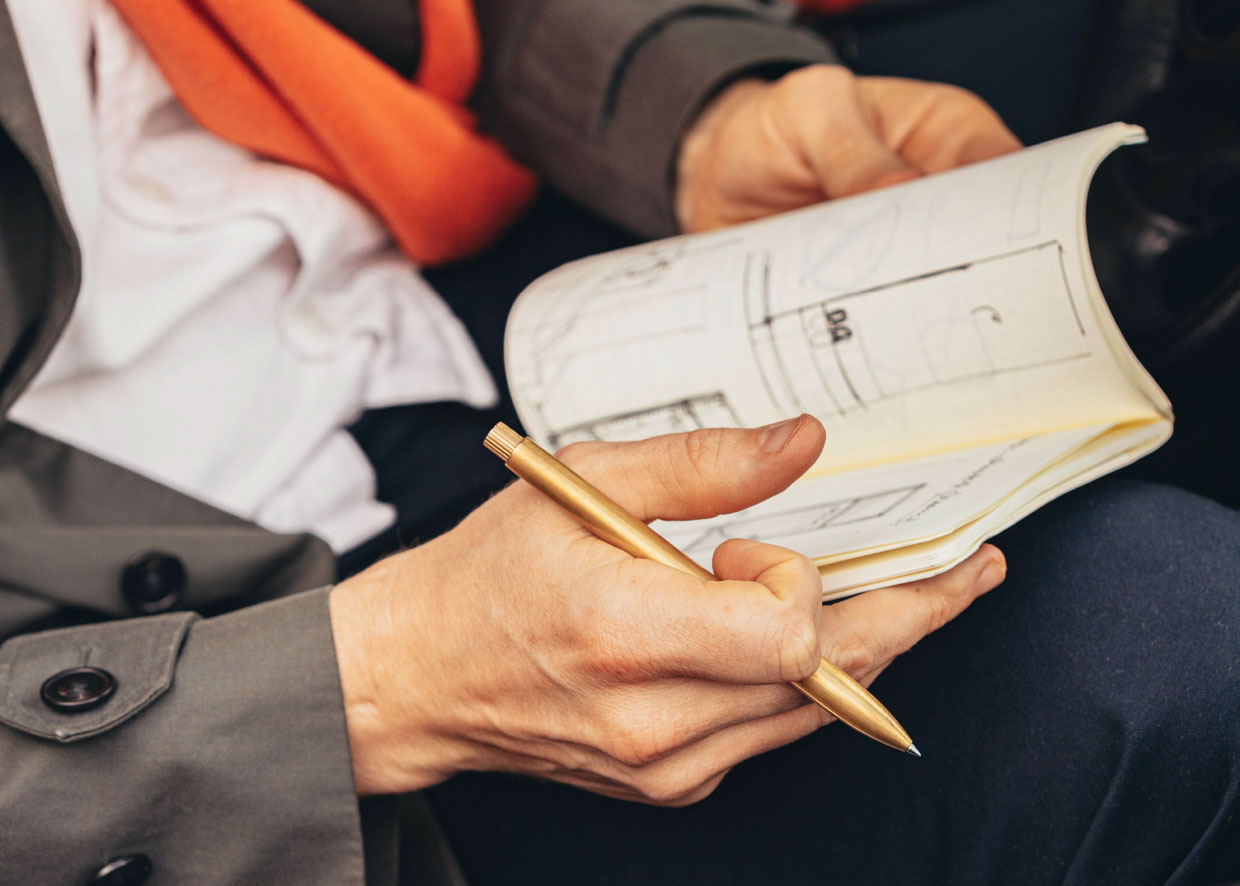
The small but fancy octagonal pen resting beside a notebook in a café. The cool brass fountain pen clipped into a canvas bag of an architect. The pen appearing in those aesthetic desk setup videos or “what’s in my bag” posts. You know, one of these:

Quality fountain pens have always had a dedicated following, however Kaweco’s recent visibility has to do with something else. The brand has moved beyond traditional pen enthusiasts and into a broader culture that values well-designed tools in our everyday lives.
The Return of the Analogue
Over the last few years, there has been a noticeable shift back toward the analogue. People are journaling again, carrying notebooks, printing photographs. Things like mechanical watches and film cameras, or paper and pens, feel closer to us in a world somewhat annoyingly dominated by screens.
Part of this is simply fatigue. Digital tools are almost unavoidable in their practicality, but when we use them day-in and day-out, they also feel a bit impersonal and distracting. Writing something down by hand offers a different kind of experience entirely. We are immediately slower and more intentional.
We organise better and memorise better when we write on paper.
Fountain pens and, for that matter, all things stationery fit naturally into that shift, but Kaweco occupies a particularly interesting place. Unlike many heritage fountain pen brands, which can feel too formal and someone who doesn’t normally use fountain pens might hesitate to try one, Kaweco feels down to earth. It’s a looker, but it’s practical and casual enough to carry every day.
People are using them in lectures, meetings, sketchbooks, journals, daily planners… The pens are designed to participate in real life. Kaweco is like the sneaker of shoes or the jeans of bottoms.
In many ways, Kaweco represents a modern version of analogue culture.
How the Kaweco Sport Took Off
At the centre of Kaweco’s popularity is the Sport series, particularly the Classic Sport, Skyline Sport, and the various metal editions that have developed an almost cult-like following.
Closed, the pen is compact enough to disappear into a pocket. Posted, it becomes quite comfortable and balanced in the hand. The octagonal cap prevents the pen from rolling across a desk and gives it an immediately recognisable shape.
The Sport feels the most approachable of all Kaweco pens. Many fountain pens still carry an image of being overly precious for beginners. Kaweco avoided that entirely. The pens are relatively affordable and available in a huge range of finishes and colours.
That accessibility has made the Sport one of the most common first fountain pens for new users, but collectors also continue returning to it. The design is refreshingly uncomplicated. It does exactly what it needs to do without excess, andthat simplicity stands out now that many products compete through constant upgrades and unnecessary features.

A German Pen Brand with Over 140 Years of History
Let’s take a look at Kaweco’s story that stretches back into the early industrial age of Germany.
The company began in Heidelberg in 1883 as the Heidelberger Federhalterfabrik, originally producing wooden dip pens before moving into fountain pens and gold nibs. The name “Kaweco” itself actually comes from the surnames of two businessmen, Heinrich Koch and Rudolph Weber, who took over the company in 1889. “KA WE CO” was later combined into the now-famous circular logo that still appears on Kaweco pens today.
By the early twentieth century, Kaweco had already become an international pen manufacturer, but one of the most interesting parts of Kaweco’s history is how early the idea behind the Sport appeared.
In 1911, Kaweco catalogues began mentioning “pocket fountain pens” designed for ladies, officers, and sportsmen. This was effectively the birth of the Kaweco Sport over a century ago. The Sport was originally created as a genuine everyday writing instrument.
Like many historic European manufacturers, Kaweco experienced periods of collapse and reinvention. That turbulent history may even be why Kaweco resonates so strongly now. The brand never became over-polished or overly corporate. It's still tied to a very German idea of functional design.
The Rise of Everyday Carry Culture
Kaweco’s popularity also overlaps heavily with the rise of everyday carry culture or what is often shortened as EDC.
Even outside dedicated communities, people are becoming increasingly interested in the objects they carry every day: wallets, notebooks, bags, watches, key organisers, cameras, and pens. The appeal is not only practicality, but the idea of building a collection of objects that feel personal and well considered.
The compact size of the Sport makes it easy to carry daily and the variety of materials allows people to choose a version that reflects their identity. Lightweight resin models are more playful and casual. Aluminium versions are sleeker and more technical. Brass and steel models develop visible wear over time and work well with a vintage aesthetic.
The pen then becomes part of a person’s routine. That emotional connection is a large part of why Kaweco has spread so successfully. Everyone we know who has a Kaweco loves their Kaweco.

People Rarely Stop at One Pen
One of the more unusual things about Kaweco is how often people end up collecting multiple versions of... essentially the same pen.
Once you spend time around the brand, it begins to make sense. Different body materials create different experiences in the hand. Nib sizes change the character of the writing experience. Seasonal colour releases and limited editions are always truly exciting. Each pen develops with a part of your identity and serves a different role.
We recognise that stationery should not be about overconsumption. Most people simply find a few pieces they truly love and keep them for years, and so they build a small personal collection over time.
This collectability is a major reason the brand has become so visible online. People enjoy sharing their combinations, the worn brass finishes. The pens photograph beautifully as well.
The Appeal of Patina and Wear
No Kaweco model captures this better than the Brass Sport. Unlike most modern products, which are designed to remain visually unchanged for as long as possible, brass develops visible wear. The pen records the habits of its owner.
That is precisely the appeal, now that it feels like the world is becoming filled with almost anonymous surfaces.

Why Kaweco Works So Well Right Now
They are small enough to carry anywhere. Durable enough for daily use. Simple enough for beginners. Distinctive enough to feel personal. Unlike digital tools, these invite focus rather than distraction.
Kaweco occupies the space between practicality and ritual. The pens make everyday tasks feel more intentional and enjoyable.
That is ultimately why Kaweco seems to be everywhere right now.
The thing is in that people don’t want to return to the past, so it’s not the nostalgia driving us, but we are looking for objects that ground us in the present moment.
We invite you to browse our Kaweco collection of pens, ink, and fountain pen accessories and find your new everyday companion.
Questions? We’d love to hear from you, so contact us on Facebook, Instagram or via email at info@bookbindersdesign.com.au